
Few films in modern Indian cinema have redefined scale, mythmaking, and visual ambition as powerfully as Baahubali: The Beginning iBOMMA. Even years after its release, the film remains a landmark spectacle that continues to dominate conversations across Telugu cinema, pan-Indian storytelling, and mainstream epic filmmaking. Directed with enormous confidence and flair, Baahubali: The Beginning is not merely a fantasy action drama; it is the opening movement of a grand cinematic saga designed to stir awe, curiosity, and emotional investment. For viewers searching for a richly mounted epic associated with terms like iBOMMA, this film still stands as one of the most visually commanding and narratively intriguing blockbusters to emerge from Indian cinema.
| Movie | Baahubali: The Beginning |
| Language | Telugu |
| Screen | 2D / 3D / IMAX |
| Release Date | 2015 |
| Star Cast | Prabhas, Rana Daggubati, Anushka Shetty, Tamannaah Bhatia, Ramya Krishnan, Sathyaraj, Nassar |
| Genres | Epic Action, Fantasy, Drama |
| Director | S. S. Rajamouli |
| Writer | V. Vijayendra Prasad |
| Producer | Shobu Yarlagadda, Prasad Devineni |
| Music | M. M. Keeravani |
| Cinematographer | K. K. Senthil Kumar |
| Editor | Kotagiri Venkateswara Rao |
| Country | India |
Plot
Baahubali: The Beginning opens with an image of mythic desperation and maternal sacrifice, and that striking opening sets the tone for everything that follows. The story begins with a mysterious child who survives impossible odds and is raised in a remote tribal region, far from the politics and bloodshed of kingdoms. That child grows into Shivudu, a young man driven by instinct, strength, and an unnamed longing for something greater than the life he has known. His curiosity about the world beyond the waterfall that dominates his landscape becomes symbolic of the film itself: a climb toward destiny, identity, and revelation.
When Shivudu finally crosses into a larger and more dangerous world, the film expands from intimate adventure into royal intrigue. His encounter with Avantika, a warrior devoted to a larger mission, becomes the gateway into the buried history of Mahishmati, a kingdom drenched in power, betrayal, and legend. Through this journey, Shivudu learns that his life is tied to forces much greater than personal desire. He is not merely an adventurous young man discovering the world; he is the living continuation of a legacy that has been violently interrupted.
What makes the plot so engaging is the way Rajamouli structures revelation. Rather than presenting the kingdom’s history all at once, the narrative slowly peels back layers of myth and memory. The audience is invited to discover the truth alongside Shivudu, and that shared discovery creates emotional momentum. The film carefully balances heroic spectacle with strategic mystery. It wants viewers to admire the protagonist’s superhuman aura, but it also wants them to ask questions. Who was Baahubali? What happened in Mahishmati? Why does this kingdom seem built equally on glory and fear?
The writing is especially effective in how it transforms a straightforward rise-to-destiny tale into something operatic. Every major beat feels heightened, yet never entirely detached from emotional stakes. Even when the film indulges in monumental set pieces, the story is still rooted in lineage, injustice, and the burden of inherited power. Without spoiling the major twists, it is fair to say that Baahubali: The Beginning succeeds because it does not treat its first installment like a mere setup. It tells a complete emotional journey while leaving behind a question so sharp and unforgettable that it turned the film into a cultural event. For audiences browsing epic Indian cinema through search terms tied to iBOMMA, this is exactly the sort of narrative that rewards patience and attention.
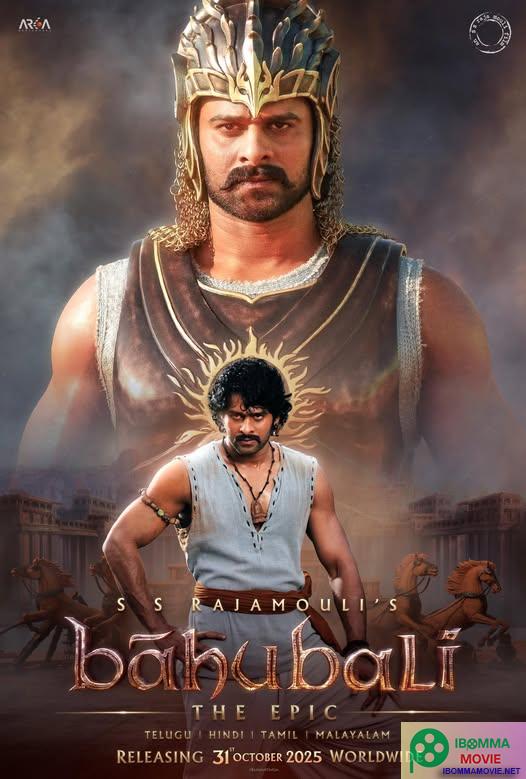
Performance
Prabhas carries the film with a commanding physical presence that suits both Shivudu’s innocence and the legendary aura surrounding the Baahubali identity. What is impressive about his performance is not just the obvious athleticism or heroic posture, but the way he modulates the character’s transformation. In the early stretches, Shivudu is driven by wonder, impulse, and youthful fearlessness. As the film progresses, Prabhas begins to project a regal gravity that hints at the man’s deeper inheritance. He effectively bridges vulnerability and grandeur, making the character feel both accessible and larger than life.
Rana Daggubati, as Bhallaladeva, brings the kind of imposing menace that a story of this scale requires. He does not play villainy in a cartoonish register. Instead, his performance is rooted in power, pride, and controlled aggression. His body language alone communicates domination. The character is crafted as a formidable counterforce, and Rana understands that the most effective antagonist in an epic is not merely cruel, but convincing as a ruler shaped by entitlement and ambition. His presence helps intensify the political tension simmering underneath the film’s visual spectacle.
Tamannaah Bhatia as Avantika has an initially striking screen presence, especially in the early portions where the character is framed as fierce, agile, and ideologically committed. She brings conviction to the role and contributes elegance to the film’s action-fantasy world. While the writing around her character shifts in ways that may not satisfy every viewer, Tamannaah still delivers enough sincerity and grace to make Avantika memorable within the broader tapestry of the story.
Anushka Shetty appears with limited screen time compared to the others, but she leaves a lasting impression through sheer force of presence. Even in restraint, she conveys dignity, suffering, and a sense of unfinished resistance. Ramya Krishnan is one of the film’s strongest dramatic anchors. Her portrayal of Sivagami is majestic, emotionally intelligent, and authoritative. She commands the frame with extraordinary poise, embodying both maternal ferocity and royal discipline. Sathyaraj adds warmth and loyalty as Kattappa, a role that depends heavily on timing, sincerity, and moral complexity. Nassar, meanwhile, lends gravitas to the political machinery of the kingdom.
Taken together, the cast does more than perform scenes; they legitimize the world. In a fantasy epic, believability depends on the actors’ willingness to inhabit the grandeur without irony, and that is precisely what this ensemble achieves. Their conviction is one of the reasons the film feels immersive rather than decorative, and it is why discussions around Baahubali: The Beginning iBOMMA still circle back to performance as much as spectacle.
Direction and Screenplay
S. S. Rajamouli directs Baahubali: The Beginning with the assurance of someone who understands both scale and crowd psychology. He knows when to overwhelm the viewer with sheer visual force and when to slow down for myth-building, character framing, or symbolic imagery. This is not a film that apologizes for being grand. It embraces excess, but it does so with formal discipline. Rajamouli’s greatest strength here lies in his ability to turn familiar archetypes into emotionally satisfying cinematic events. He stages heroism as ritual, revelation as spectacle, and conflict as destiny.
The screenplay by V. Vijayendra Prasad gives the film its mythic architecture. At its core, the writing borrows from folklore, royal drama, and heroic fantasy, yet the narrative remains sharply accessible. The exposition is extensive, but it rarely feels inert because it is attached to emotional stakes and escalating questions. Rajamouli also understands the value of visual storytelling. He does not rely solely on dialogue to explain greatness; he constructs it through scale, movement, and reaction. A character climbing a waterfall, lifting impossible weight, or walking into battle is framed not simply as action, but as the creation of legend.
The pacing deserves particular attention. The first half leans into adventure and discovery, while the second half broadens into historical and political drama. That tonal expansion could have felt uneven in less capable hands, but Rajamouli manages it with surprising fluency. There are moments when the film indulges in melodrama or stylized exaggeration, but that excess is part of its design rather than a flaw of confusion. The director aims for operatic impact, and he achieves it by committing fully to emotional and visual intensity.
If there is a weakness, it lies in a few stretches where the screenplay simplifies character dynamics in favor of momentum, especially in some romantic portions. Yet even those sections do little to diminish the overall achievement. The film’s narrative design is constantly building toward revelation, and the payoff is unforgettable. By the time the final act lands, Rajamouli has not only established a fictional kingdom, but also created a question powerful enough to linger in popular culture. That is a rare accomplishment. Even viewers arriving through searches connected to iBOMMA are likely to find themselves pulled into something far more ambitious than a routine action fantasy.
Music
M. M. Keeravani’s music is one of the film’s invisible pillars. In a project as visually overwhelming as Baahubali: The Beginning, it would have been easy for the score to become merely decorative or bombastic. Instead, Keeravani composes with a strong sense of dramatic shape. The soundtrack supports the film’s mythic ambition while also giving emotional definition to its major characters and settings. The score understands that grandeur is not only about loudness; it is also about rhythm, silence, buildup, and release.
The background score consistently enhances the emotional stakes of the narrative. Scenes of ascent, revelation, and confrontation are elevated by music that feels ceremonial without becoming overbearing. The orchestration often leans into majesty, but there is also an undercurrent of longing and tragedy in key moments. This balance matters, because the world of Mahishmati is not merely heroic. It is haunted by sacrifice, betrayal, and suppressed truth. Keeravani’s compositions subtly carry that emotional duality.
The songs, too, serve a broader cinematic purpose. They are not just pauses in the storytelling but extensions of mood and world-building. Some tracks deepen the romantic and adventurous energy of the early portions, while others contribute to the royal and spiritual texture of the film. Even when individual songs may vary in impact depending on viewer taste, the musical identity of the film remains cohesive. It sounds like an epic. More importantly, it feels like one.
What lingers after the film ends is the way the music becomes inseparable from memory. Heroic imagery, emotional turning points, and moments of looming danger are all amplified by Keeravani’s instinct for scale. The score does not just accompany the film; it crowns it. For a production of this magnitude, that contribution is invaluable.
Theme
Beneath its action, visual effects, and royal spectacle, Baahubali: The Beginning is deeply invested in themes of identity, inheritance, and moral legitimacy. The film asks what makes a ruler worthy of loyalty. Is power a matter of birth, strength, conquest, compassion, or sacrifice? This question runs quietly through the narrative and gives the story a resonance that goes beyond fantasy entertainment. Mahishmati is not just a kingdom; it is a moral stage upon which competing definitions of leadership are tested.
The film also explores the tension between destiny and self-discovery. Shivudu begins as someone unaware of his historical significance, yet drawn instinctively toward danger, justice, and the unknown. His journey suggests that identity is both inherited and earned. Blood may connect him to greatness, but action confirms it. That idea makes the character arc more emotionally satisfying, because the film does not simply tell us he is important. It shows him growing into the shape of his destiny.
There is also a strong undercurrent of maternal and familial symbolism throughout the film. Mothers, guardians, and surrogate bonds are central to the emotional language of the story. The film repeatedly associates love with sacrifice and authority with responsibility. Even the larger conflict over the throne is infused with questions of loyalty, nurture, and betrayal within family structures. This emotional framework helps humanize a story that could otherwise have become lost in its own scale.
On a broader level, the film functions as a modern myth. It taps into archetypes of the lost heir, the usurped legacy, the noble warrior, and the kingdom in moral crisis. Yet it packages these archetypes with a distinctly cinematic energy that makes them feel alive for contemporary audiences. That is why the film continues to attract attention through popular discovery paths, including searches around Baahubali: The Beginning iBOMMA and related epic cinema interests. Its appeal is not limited to spectacle; it lies in the timeless emotional grammar underneath the spectacle.
Conclusion
Baahubali: The Beginning remains one of the defining Indian epics of its era because it understands something essential about blockbuster filmmaking: size alone is not enough. A grand film must also create wonder, emotional attachment, memorable characters, and a world that feels worthy of the audience’s imagination. S. S. Rajamouli delivers all of that here with remarkable confidence. The film is visually extravagant, narratively compelling, and dramatically sincere in ways that many large-scale spectacles fail to achieve.
Its performances give it emotional weight, its direction gives it mythic authority, and its music deepens its cinematic impact. More importantly, the film knows how to leave the audience wanting more without feeling incomplete. It ends not as a fragment, but as the first movement of a legend. That distinction is why it continues to hold such a powerful place in conversations about Telugu cinema, Indian fantasy epics, and unforgettable theatrical storytelling.
For anyone exploring major Indian blockbusters or searching through film-related terms like iBOMMA, Baahubali, or Baahubali: The Beginning iBOMMA, this is a film that fully earns its reputation. It is not just a visual spectacle to admire from a distance. It is a boldly imagined, emotionally charged, and culturally significant cinematic experience that still feels larger than life.